Acrylic Edge Polishing
View Details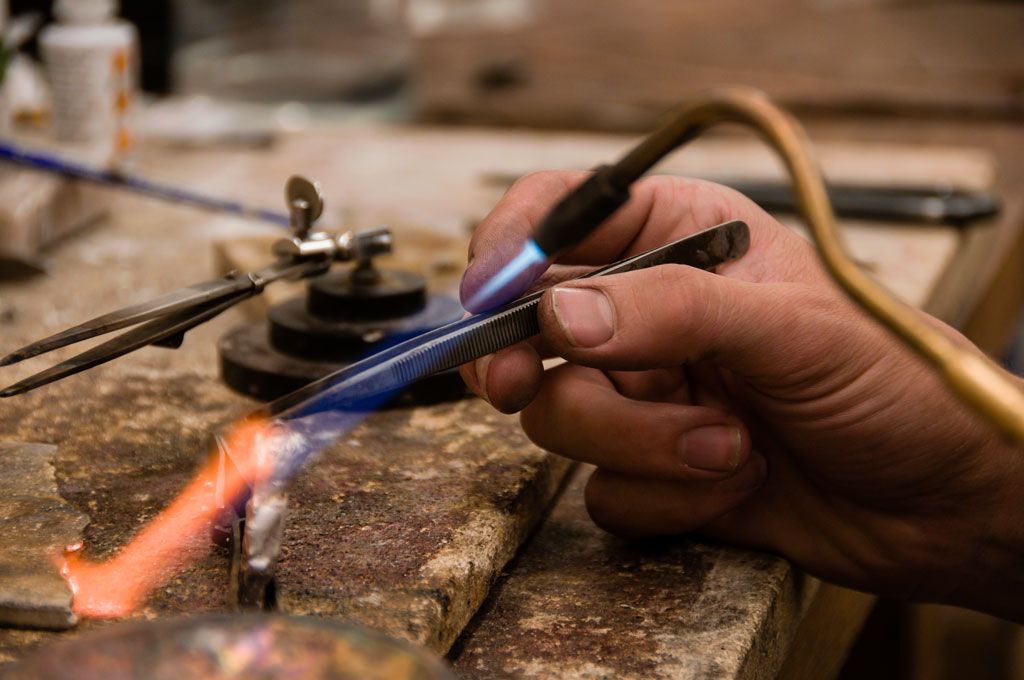
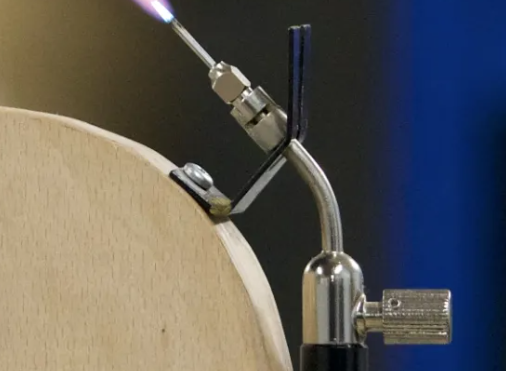

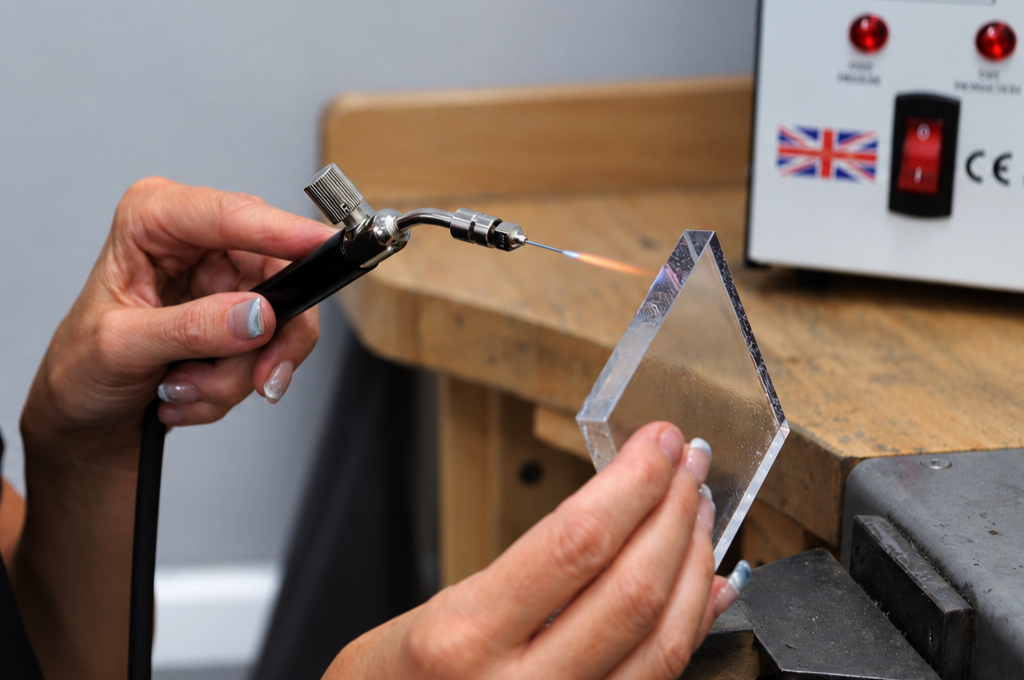
In the plastics fabrication industry, transforming raw edges into premium, glass-like surfaces is essential. Aquaflame Systems provide the ultimate solution for flame polishing transparent thermoplastic acrylics—including industry-standard materials like Perspex®, Plexiglas®, Lucite®, and Acrylite®. Once a component has been saw-cut, laser-profiled, or CNC routed, it often leaves a dull, frosted edge. The targeted oxy-hydrogen micro-flame melts away surface imperfections instantly, providing an immaculate, high-gloss finish with zero tool marks.
Mechanical buffing and scraping take time, labour, and struggle to reach internal cutouts. Aquaflame replaces slow finishing processes with high-efficiency flame polishing.
Traditional flame polishing relies on heavy, highly pressurised gas cylinders like propane, hydrogen, or acetylene. These tanks bring strict commercial health and safety regulations, storage overheads, and constant leak or explosion hazards to busy fabrication benches. Aquaflame Systems eliminate stored gas risks entirely.
Using a standard electrical hookup, the machine uses electrolysis to convert simple distilled water into an eco-friendly hydrogen-oxygen mix purely on-demand. Because gas is only generated while you work, gas isn't stored in the system under high pressure when the machine is switched off. The system is lightweight, completely portable, requires no complex multi-stage regulators, and produces an entirely clean, non-toxic flame whose only chemical byproduct is water. It is the ultimate way to lower workshop liability while boosting edge quality.



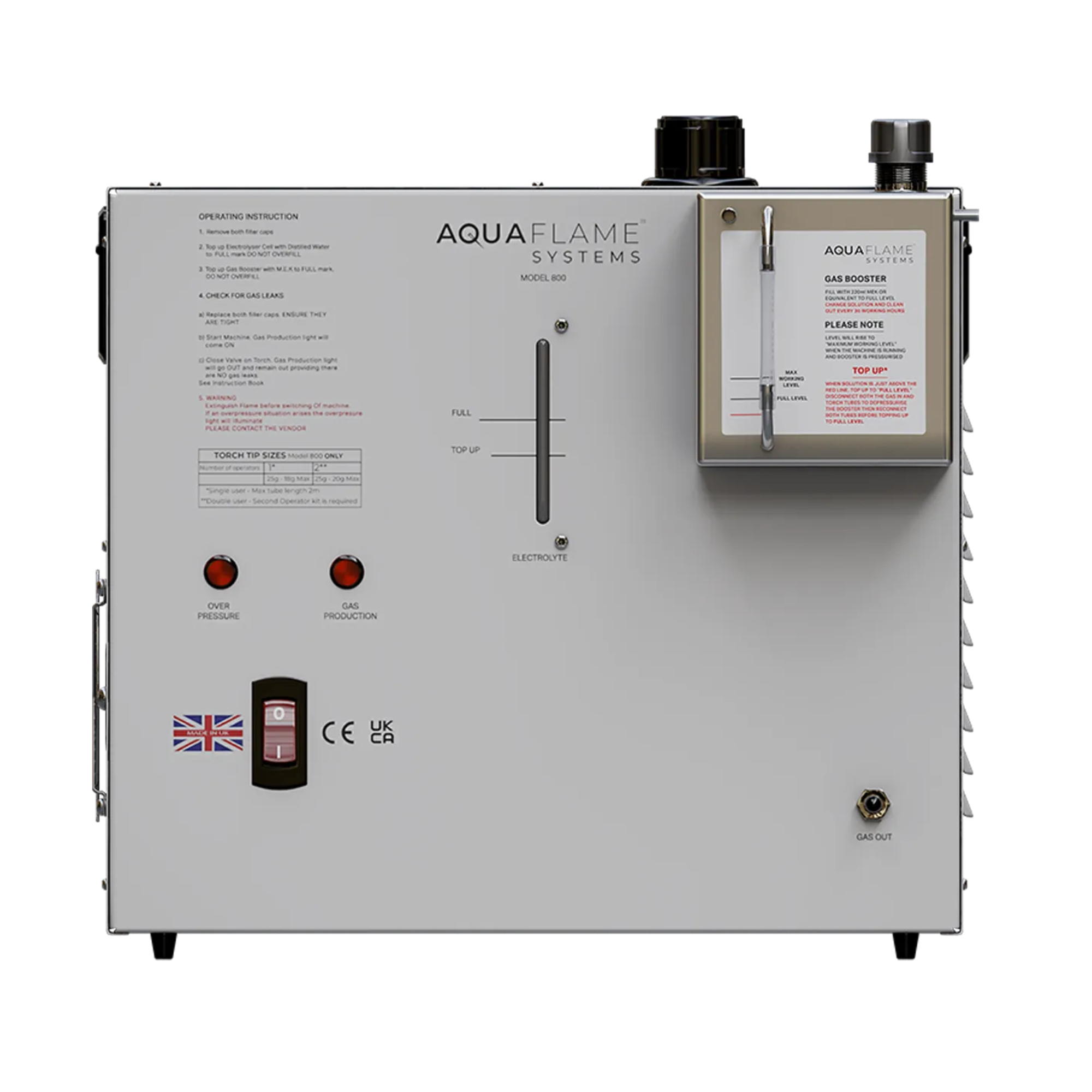
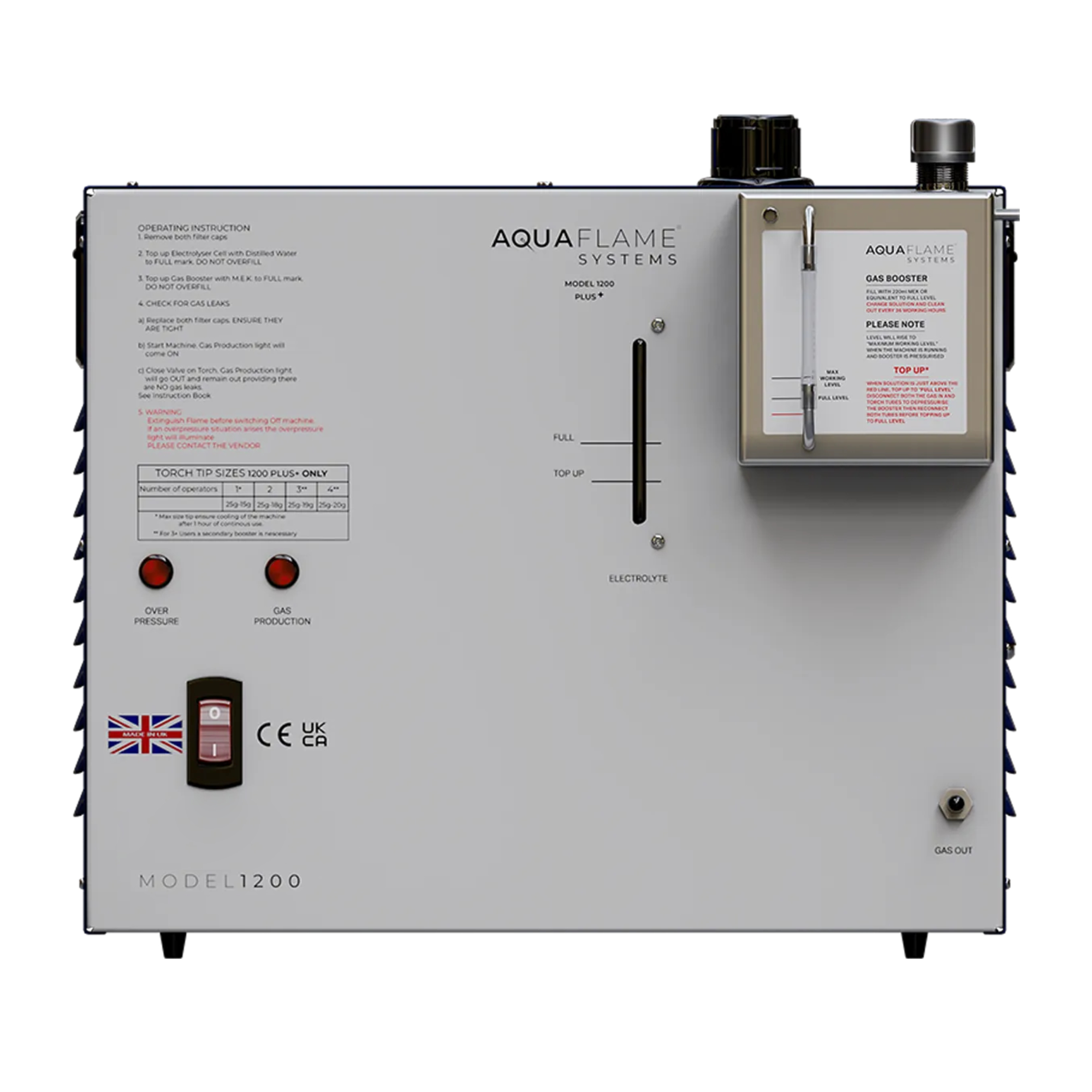
There are currently three machines in the Aquaflame range. The Model 500 is used mainly by single users. The Model 800 is a two man machine whereas the Model 1200 is used in larger manufacturing setups and can support up to 4 users simultaneously. They are all high performance gas-generating units, producing a high temperature precision flame – in the range 1200-3300°C. Using a standard electrical supply, hydrogen and oxygen are produced by the electrolysis of distilled water such that the hydrogen can be burnt in the oxygen to produce a highly controllable and efficient high energy heat source.